5 min read · PulseNet365 Team
Few HR processes carry as much weight, or as much dread, as performance reviews. When they’re late, inconsistent or a black box, they erode trust instead of building it. The problem is rarely the people. It’s the process.
A fair review has three qualities: it’s structured, it draws on more than one perspective, and it’s on time. Here is how that looks in practice.
Start from a template
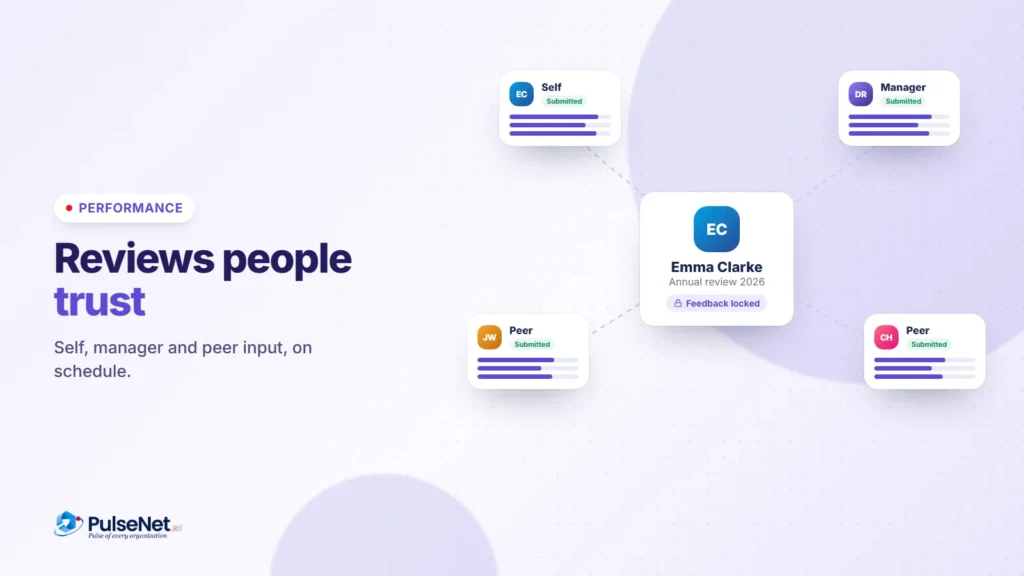
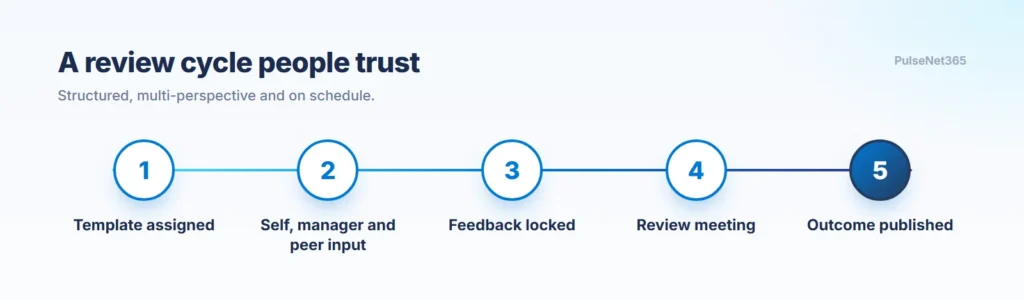
HR builds a reusable template with the questions and evaluation points answered by the employee (self-assessment), the manager and, where relevant, peers. The template is assigned to employees with a clear review period: quarterly, half-yearly or annual.
Run the cycle, then lock it
When the cycle starts, reviewers are notified and complete their parts. Once everyone has submitted, HR locks the feedback so nothing changes after the fact, then schedules the review meeting between employee, manager and HR. After the conversation, HR records a conclusion and publishes the manager’s feedback to the employee.
What makes it fair
Two things. First, multiple perspectives (self, manager and peer) reduce single-viewpoint bias. Second, the schedule and reminders mean reviews actually happen instead of slipping a quarter. Employees know when feedback is coming and that everyone is measured the same way. PulseNet365 Performance & Talent runs this cycle, and Training & eLearning picks up the development plan that follows.
A good system won’t make a hard conversation easy. It makes it honest, consistent and timely, which is what people actually want.